
Sub-Total: $0.00
UNDERSTANDING SET TRIGGERS
Tags:
By Heidi Lyn Rao
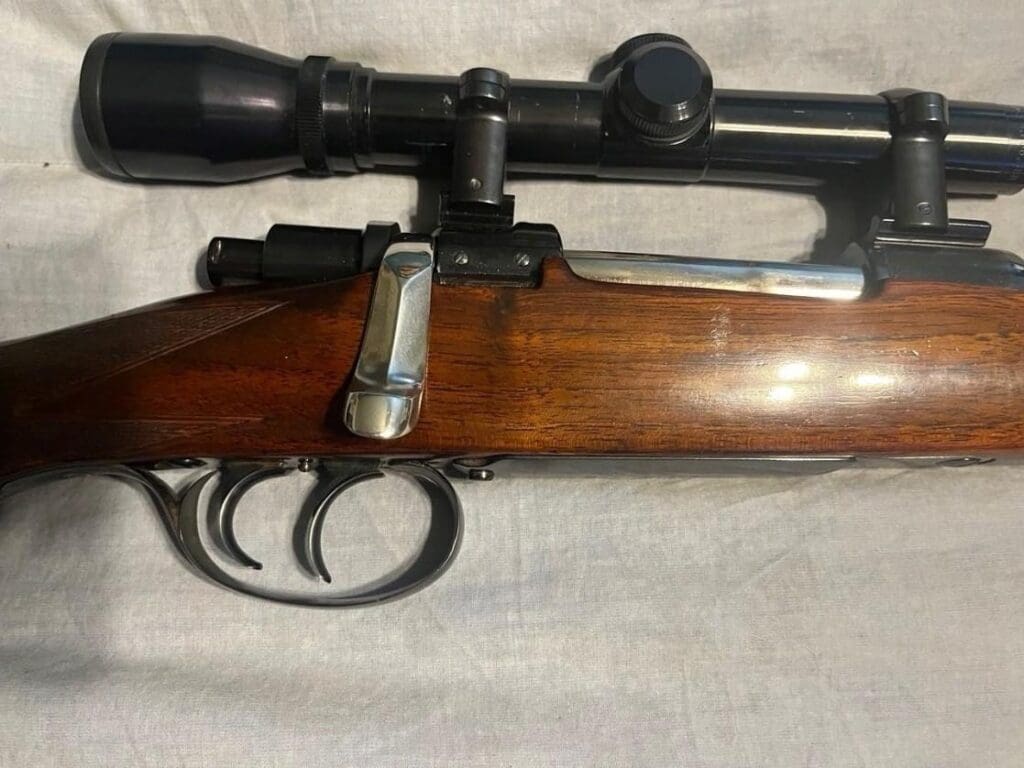
Set triggers are a very unique type of firing system that can be found on older and contemporary rifles as well. Originating in Europe, set triggers were common in the 1700s in flintlocks, 1800s in percussion caps, and the 1900s in bolt, break, and lever action firearms. In the U.S., set triggers were preferred by buffalo hunters because of accuracy at extremely long ranges.
Many avid shooters have either never heard of or seen a rifle with set triggers. This can create a very dangerous situation for those who find themselves in possession of a firearm with this type of trigger system without knowing how to use it properly and safely.
What Is a Set Trigger?
A set trigger is a specialized trigger system that employs a mechanism that allows the shooter to “set” the trigger so that the firearm can be fired with very little pressure on
the trigger, to release the firing pin. A normal trigger pull could range between a few pounds, to a heavy trigger pull of upwards of six to eight pounds. A set trigger puts the pull between a few ounces to the weight of a “hair,” hence the term, “hair trigger.”
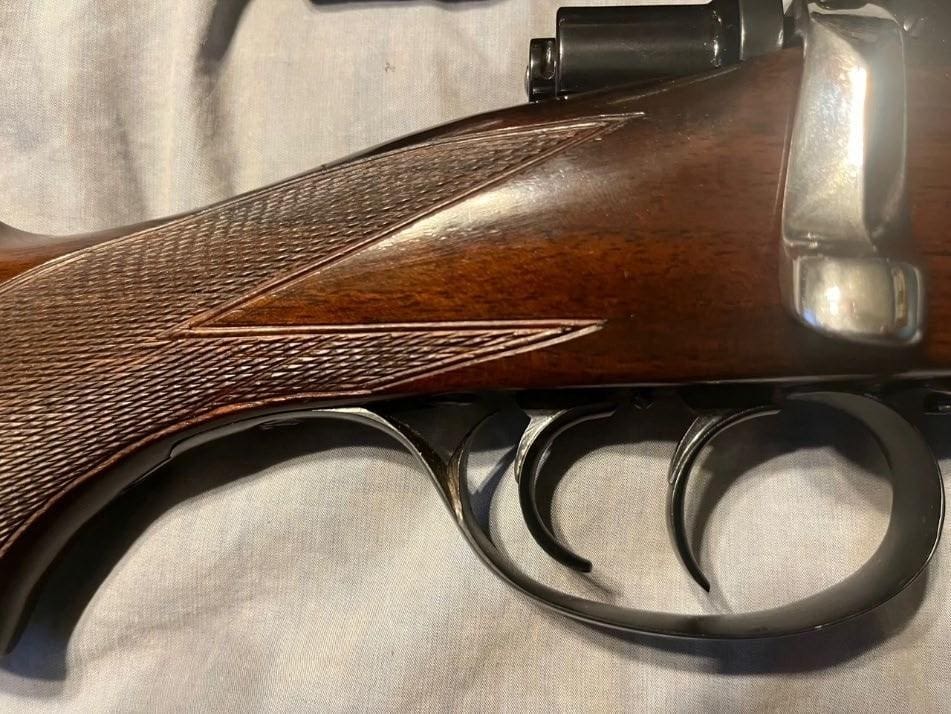
A set trigger firing system can be made of one trigger or two. These are called a “single set trigger” or a “double set trigger” firearm. A single set trigger looks like a normal bolt action, break action, or lever action firearm with one trigger. A double set trigger system looks like the two triggers you would see on a side-by-side shotgun. The difference is that a side-by-side shotgun would have two barrels, and the double set trigger rifle only has one barrel.
How Does the Set Trigger Work?
Set triggers work by a series of levers and springs internal to the firearm. Each lever operates a sear that gets finer or lighter with each progression. A sear is a component within the trigger mechanism that holds back the hammer, striker or bolt until the right amount of pressure is applied to the trigger. After the trigger is set, when the firing trigger is pulled, each lever trips a sear within a split second.
The number of levers that a set trigger system has can range from three to seven levers. Very few shooters can use a seven-lever set trigger effectively. Experienced set trigger shooters agree that a five-lever system is the most effective for most shooters.
The single set trigger performs both functions: setting the trigger and discharging the firearm. This is done by taking the index finger of the shooting hand, also known as the trigger finger, and sliding it behind the trigger. The trigger finger then puts pressure on the back of the trigger, sliding it forward. The trigger is now set. At this point the trigger finger is moved from the rear of the trigger to forward the trigger, without touching it. Once the shooter is ready, the trigger finger barely “touches” the trigger to discharge the firearm.
With a double set trigger system, each trigger performs its own function. The rear trigger sets the trigger, and the forward trigger releases the firing pin to discharge the firearm. This is done by taking the trigger finger and placing it on the rear trigger and pulling. The shooter will feel a “click” which indicates the forward trigger is set. The
shooter then moves his or her trigger finger forward of the front trigger without touching it. When the shooter is ready, he or she barely “touches” the forward trigger to discharge the firearm.
What Is the Correct Way of Using Set Triggers?
Like all types of shooting, there is a right way and a wrong way of shooting a rifle with set triggers. Individuals who know the right way of shooting a rifle with a set trigger system are avid fans of them. Those who do not know the correct way of shooting with set triggers, tend to dislike them.
You cannot shoot a rifle with set triggers the same way you shoot a “regular” rifle. It has to do with pulling the rifle in tight, into your shoulder. Most people who are used to using a regular rifle will place their finger on the trigger guard and then feel for the trigger before they pull their rifle tightly into their shoulder, as they place their index finger on the trigger to shoot. In other words, when lined up on target the shooter feels for the trigger as they are pulling in the rifle tightly into their shoulder, then squeezes the trigger. If the same technique is applied when using a rifle with a set trigger, the result is the rifle not being firmly pulled into the shoulder, since their initial trigger touch is to set the trigger. The shooter generally experiences much more “felt recoil” when this occurs and the result is the shooter “pulls” their shot. This happens because as soon as the index finger
contacts the trigger, the firearm discharges when the shooter is not ready, because of the “hair trigger.”
When shooting a rifle with set triggers, the rifle must be pulled tightly into the shoulder when you set the trigger. When the shooter gets behind the rifle and aligns his or her sights with the target, the rifle should be pulled tightly into the shoulder. When using a double set trigger system, once the rifle is on target and pulled into the shoulder, the shooter should slip his or her index finger into the rear trigger and pull it rearward to set the rifle. It is at this point that the index finger can be moved to the front trigger to fire.
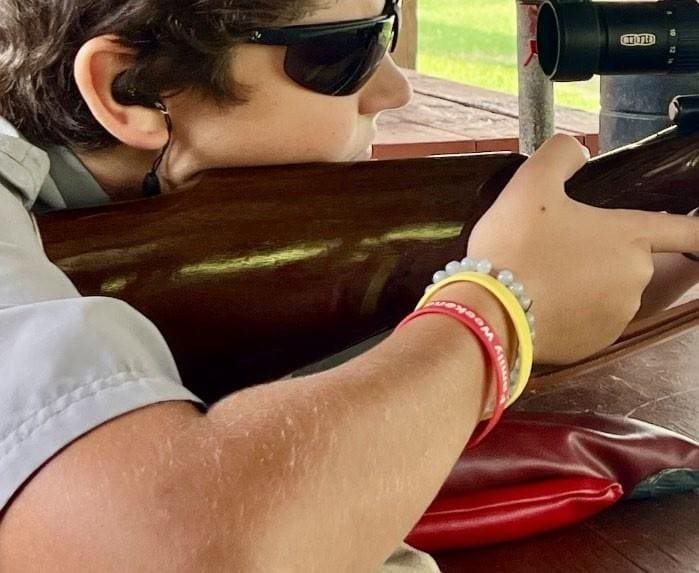
When using a single set trigger system, the rifle should be pulled tightly into the shoulder when the target is within the sights. The index finger is then slipped behind the trigger and pushed forward. While maintaining a tight pull of the rifle into the shoulder, the index finger is then placed in front of the trigger. Once the finger makes contact and barely touches the trigger, the firearm should discharge.
What Are the Safety Rules?
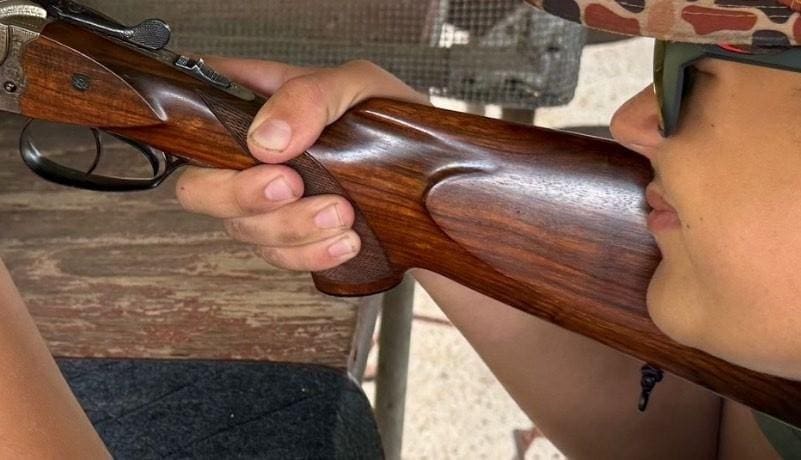
Can set triggers be dangerous? The answer is unequivocally – YES! Even though set triggers can be dangerous, just like anything else having to do with firearms, the shooter must know how to use their equipment correctly and apply the corresponding safety rules to stay safe. Unfortunately, too many individuals did not know how to correctly use set triggers, which resulted in accidents. This led to lawsuits that have made set triggers hard to find, if not impossible.
Most set triggers have an adjustment screw between the triggers in a double set trigger system, or within the trigger guard under the receiver in single set trigger systems. If the set triggers are adjusted to “sensitive,” the firearm can discharge if the rifle is bumped or moved. For example, I have a 1956 Schoen-Mannlicher (Mannlicher- Schonauer) chambered in .243 Win that can be adjusted so sensitively that if I raise the muzzle up, the weight of the trigger can discharge the firearm.
Even though new set triggers may be hard to find, there are many available on rifles prior to the lawsuits. Set triggers can be very safe if a few basic safety rules are followed:
- Always leave triggers unset unless you are on target
- Always unset triggers (open action) if you move your firearm off the target
- Always adjust set trigger within moderate ranges These are in addition to the NRA Gun Safety Rules:
- Always keep the gun pointed in a safe direction
- Always keep your finger off the trigger until ready to shoot
- Always keep the gun unloaded until ready to use
It is important to remember that it is the characteristic of the set trigger system that produces the “hair trigger” that can make this firearm dangerous if the safety rules are not followed.
Set triggers are very unique types of firearms. They can be very accurate and fun to shoot. If you have never had a chance to experience this type of firearm, get out of
your comfort zone and try it out. By trying out different types of guns, actions, and the various shooting sports, you just might find an interest in something you have never expected!