Sub-Total: $0.00
You Have an 8X57 Mauser – Great, But Which One?
Tags:
By Heidi Lyn Rao
There are many individuals throughout history who have changed the world. When you think of the men and women who were instrumental in shaping civilization, we can think of the inventions and developments that made life simpler and ended suffering. Thomas Edison patented 1,093 inventions that made life easier and more enjoyable. Dr. Alexander Fleming discovered penicillin in 1928 that saved countless lives throughout the world.
We think of these things because human beings are a naturally optimistic species regardless of what we see on the news, and how much self-defeating “doom-scrolling” we do. No matter how bleak our future looks or the trials and tribulations we are faced with, we as a people try to find the “silver lining” or have a “the glass is half full” attitude about what we are facing. This is because humanity finds ways to overcome and invent the things we need to persevere.
Because of our optimistic attitude, many individuals refuse to see how our world was changed for the good even through violent acts such as war. Depending on the side that won, certain inventions were able to be developed. Even in some instances, life-
altering inventions were made available through the losing side. What allowed these famous individuals to produce the things that they did was a product of inventions in firearms.
This is because suppressive governments were defeated to allow the individuals in countries that were founded on freedom and innovation to pursue their dreams of making a better world. The preservation of freedom was, and still is, paramount. It was the development of certain firearm breakthroughs that stopped evil and let good reign.
There was the invention and development of one firearm and its evolution that changed the world forever. This was the German Mauser Rifle, chambered in 8X57 (7.92X57 Mauser). This rifle changed the world due to its advanced “Mauser Action.” The ironic part is that it was the invention of two German brothers developing firearms for the German army that helped defeat their nation in two world wars.
In World War I, Germany was defeated in large part due to the U.S. M1903 Springfield and the British P14/M1917 Enfield. Both firearms were based off the Mauser action. In fact, Mauser sued the U.S. Government, and the U.S. had to pay royalties to Mauser-Werke (the German arms manufacturer) up until the start of the war. In World War II, Germany was once again defeated by the U.S. using the Mauser action-based Springfield 1903 and the British Mauser action-based Model 1917 Enfield.
Paul and Wilhelm Mauser developed their first successful design in 1871. The Gewehr 71 “Infantry Rifle 71” was chambered in 11X50 R black powder. With Paul designing the firearm and Wilhelm handling the business end, they then produced the firearm that changed the gun world forever. In 1888 they developed the Gewehr 88 chambered in 8X57 “J”-bore. This rifle was also known as the 88 Commission Rifle or the “J” Patrone (“J” Cartridge).
In 1905, the Gewehr 88 was improved and the S Patrone Rifle (“S” Cartridge) and eventually the K98 chambered in 8X57 “S” bore became the German standard firearm in both world wars. The Mauser Action became known as, and still is by many gun experts, the finest bolt action rifle ever created. Many gun manufacturers to this day try to improve upon the Mauser action, but many experts believe that Paul Mauser’s invention is still the standard and the best ever made.
Peter Paul Mauser is to Germany what John Browning is to the United States. Like the firearm invented and designed by John Browning, the firearms invented by Paul
Mauser are highly sought after. These firearms may be securely stored away in a gun safe; they may be seen by firearm enthusiasts who are shooting them at the local gun range; and versions of the K98 can still be found in hunting camps during deer season.
8X57mm Caliber
The 8X57 mm cartridge can be found in many different types of long arms. This caliber can be found in bolt-action firearms, single shot or side-x-side doubles, drillings, and vierlings. If you end up acquiring one of these German firearms produced prior to 1939, you need to make sure that you shoot the right 8X57 mm Cartridge out of it.
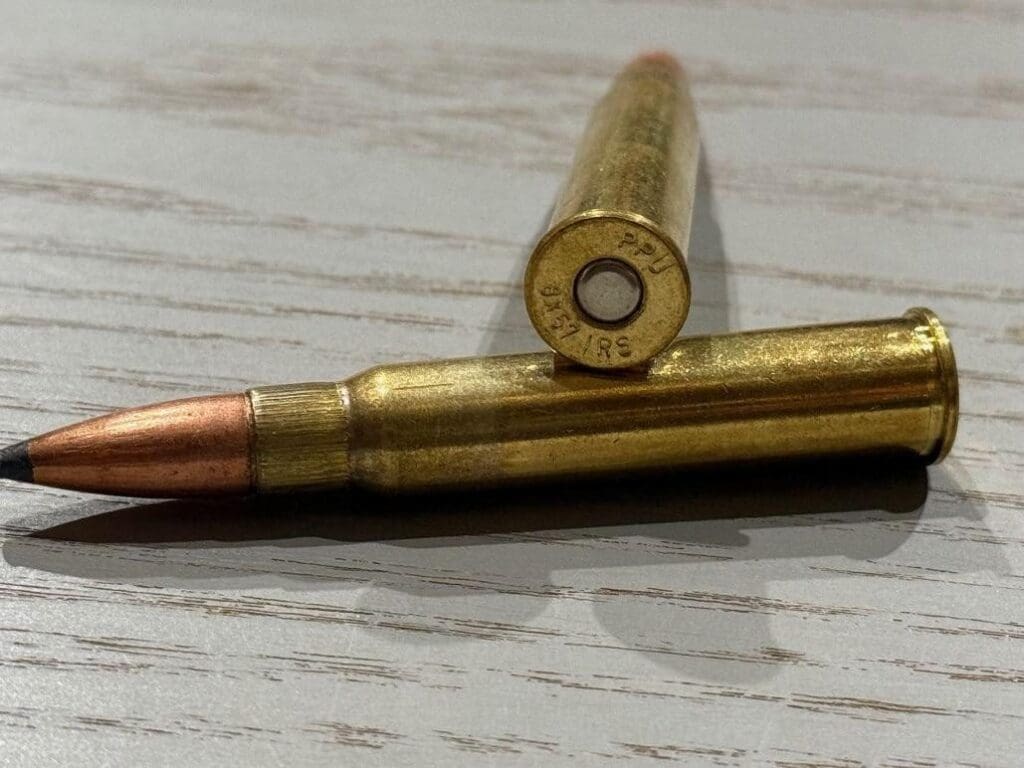
There can be some confusion because there are four different 8X57 mm cartridges. The first thing that you need to know is that the “standard” 8X57 mm cartridge is actually 7.92X57 mm.
This is where it can get complicated. This caliber came in two different case designs: rimmed and rimless. To further complicate matters, the rimmed cartridges came in two different bore sizes, and the rimless cartridges came in two different bore sizes.
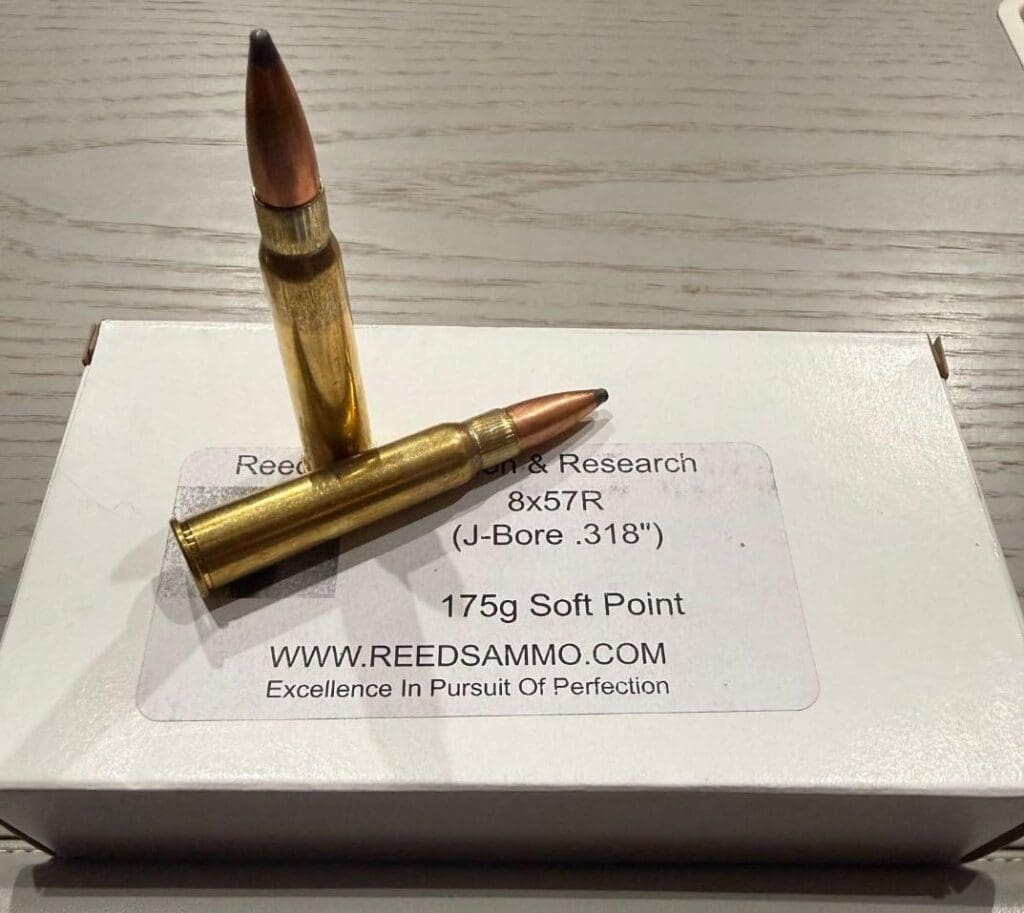
The two different bore sizes were the “J”-bore at .318-inch bore size, and the “S”-bore at .323-inch bore size. So, the rifle you have could be a “J”-bore rimmed cartridge or a “J”-bore rimless cartridge. It could also be a “S”-bore rimmed cartridge or a “S”-bore rimless cartridge.
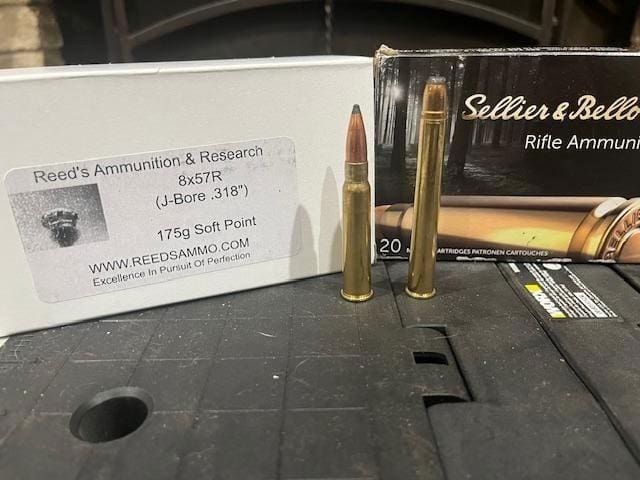
To end the confusion with four different types of cartridges, the German government began regulating the 8X57 mm cartridge. In 1939, the German regulation – “Normalisierung Verordnung” (German words meaning “normalization or standardization regulation”) prohibited the production of all non- “S”-bore chambered rifles.
“J”-Bore Cartridges
The 8X57mm “J”-bore cartridge was introduced in 1888 in the German infantry Model 1888 Rifle. This rifle was designated the J-Patrone rifle. In 1898, the German infantry rifle changed to the Gewehr 98. This rifle was also chambered for the “J”-bore cartridge. The diameter of the “J”-bore is .318-inches, or 8mm.
Many “J” – bore 8X57 mm cartridges are not only found in military rifles, but also many sporting firearms of this era. The .318-inch diameter bullet is more than capable of taking large game animals found in Europe such as the red stag and wild boar. The “J” – bore 8X57 mm round is considered a Kaiser’s hunting cartridge.
“S”-Bore Cartridges
The 8X57mm “S”-bore cartridge was introduced in 1905 in the German infantry model 1888 Commission rifle and the Gewehr 98. This rifle was designated the S-Patrone rifle. The diameter of the “S”-bore is .323-inches, or 8.20mm. When the “S”-bore was introduced in 1905, the existing 88 Commission and Gewehr 98 military rifles were rechambered from the “J”-bore to the larger “S”-bore. This was done in 1914, prior to World War I.
When World War II came about in 1939, German gun manufactures were making firearms for hunting, and the German army was only producing “S”-bore rifles because of the 1939 standardized regulation. The popular German infantry rifle was the K98. There are many K98 rifles found in hunting camps that have been “sporterized” for hunting deer.
If you find a Model 88 Commission Rifle or a Gewehr 98 in good shape at a decent price, buy it! If you are lucky enough to find one, it is very important to know if you have an “J” – bore or an “S” – bore rifle for safety reasons. The best way to determine what bore you have is to learn how to slug a barrel.
The old “J” – bore German firearms are very fun to shoot. They just feel different than firearms shot with newer cartridges. These older, slow-burning cartridges have a personality of their own and I am never one to pass up a new shooting experience!