Sub-Total: $0.00
Why Shooting “Old School” Might Be Your Best Hunting Move Yet!
Tags:
THE OFFICIAL PUBLICATION OF HOUSTON SAFARI CLUB FOUNDATION • SUMMER 2026
BY HEIDI LYN RAO
As hunting seasons around the country draw to a close, most hunters are “winterizing” their firearms for the “long sleep” until the next season opener. This is the time that we reflect on the hunts of the past season, plan and prepare for trips next season, and make any repairs on equipment that needs tending to.
Every hunter I know still gets excited as the new season approaches, the sign of a real sportsman or sportswoman! Even though that excitement is still within us, there is no doubt that with each passing year, the “glow” wears off just a little. That does not mean we get less excited for the season opener or even when that first trophy animal materializes out of the timbers, it just means that the feeling we once had as a “new hunter” fades a little every year.
Fortunately, we can renew that feeling and put the “shine” back into our experience. We can revive that “new hunter” feeling by going “old school” and trying something new by trying something old. Now is the time to start your “revival.” If you start now, you almost have an entire year to prepare for the following hunting season.
First, research older hunting techniques, methods, and firearms. You might be surprised how much enjoyment you will get out of this research. Many effective techniques have been lost over time, and many hard-to-find, obsolete calibers were as popular in the past as the “latest and greatest” new calibers on the market are today.
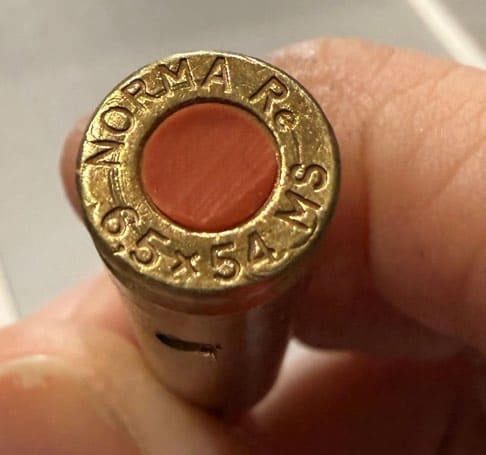
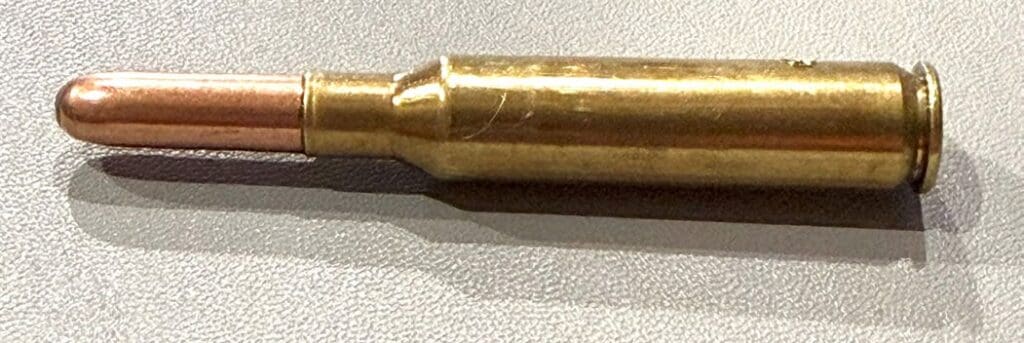
For example, the 6.5X54 M-S cartridge was once a very popular round, but is now obsolete, despite its superb sectional density. Just like the 6.5 Creedmoor is today, it will likely become obsolete in the distant future as well. By starting your research now, you have plenty of time to find something new, practice the technique, and become proficient with a “new” firearm at the range.
Change is the best way to keep things fresh and exciting, and hunting is no different. There is something that you can do to regain that “new hunter” feeling. This is as easy as changing up your go-to firearm!
MOVE BEYOND YOUR DEFAULT FIREARM
Without exception, every hunter I know has a go-to firearm for the hunting opportunities they pursue. Firearms are a personal choice, and hunters can be very superstitious about using anything other than their gun of choice. It does not matter if it is a shotgun, rifle, or handgun; everyone seems to have their favorite. Some hunters even go so far as to name their favorite firearm.
Daniel Boone named his Kentucky Rifle, originally known as the Pennsylvania Long Rifle (.45 caliber flintlock), “old Tick-Licker.” Buffalo Bill Cody named his 1866 Springfield Allin Conversion rifle (.50 caliber percussion cap) “Lucretia Borgia,” and Davy Crockett named two of his rifles: an 1822 custom James Graham (.40 caliber flintlock) he named “Old Betsy” and an 1834 ornate rifle gifted to him by the Philadelphia Whig Party he named “Pretty Betsy” (.44 caliber flintlock). Davy Crockett’s rifle, “Old Betsy,” currently resides in San Antonio, Texas, in the Alamo Museum.
TAKE ON THE CHALLENGE OF AN OLDER CARTRIDGE
Changing things up is not as easy as it sounds, but it can be well worth the time and commitment. A great way to regain that “new hunter” feeling is to research and find an obsolete cartridge that interests you. An obsolete cartridge is one that might have been popular in the past but is now out of production of both ammunition and the firearms chambered for it.
As mentioned above, it takes a lot of research, but the good news is that finding obsolete cartridges is easier now than in the past. Before the internet, the only way to get obsolete cartridges was to reload them yourself or have someone do it for you. Now, a simple internet search can turn up just about any cartridge ever made.
The same goes for the firearm chambered for the obsolete cartridge. There are many companies that can be found on the internet that sell firearms, and often include firearms that are chambered in what you are looking for.
TEST YOUR SKILLS WITH AN OLDER ACTION
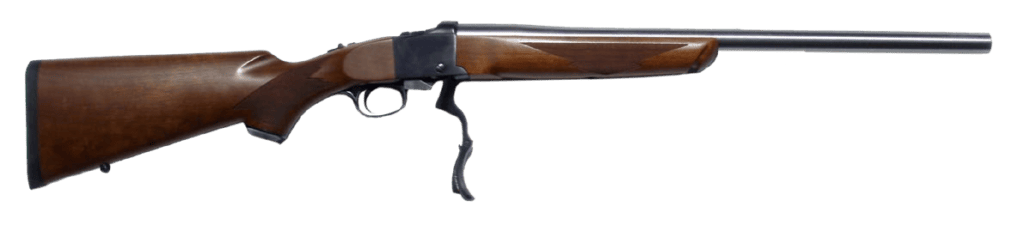
There are several types of firearms that shoot obsolete cartridges. These include the common bolt-action and lever-action firearms. Fortunately, for those wanting to shoot firearms that came before the bolt-action and lever-action guns, there are also Falling Blocks, Rolling Blocks, and Trapdoors. These unique firearms were common in Europe and the United States before the 1850s.
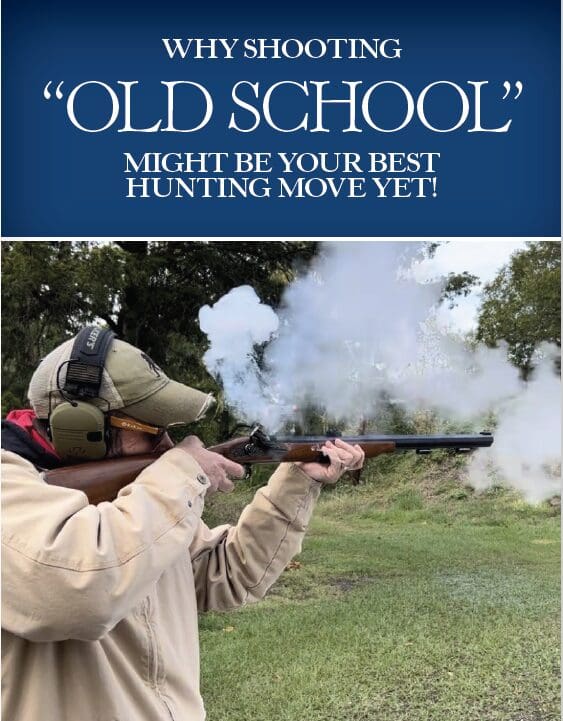
Left: Smoke, steel, and tradition.
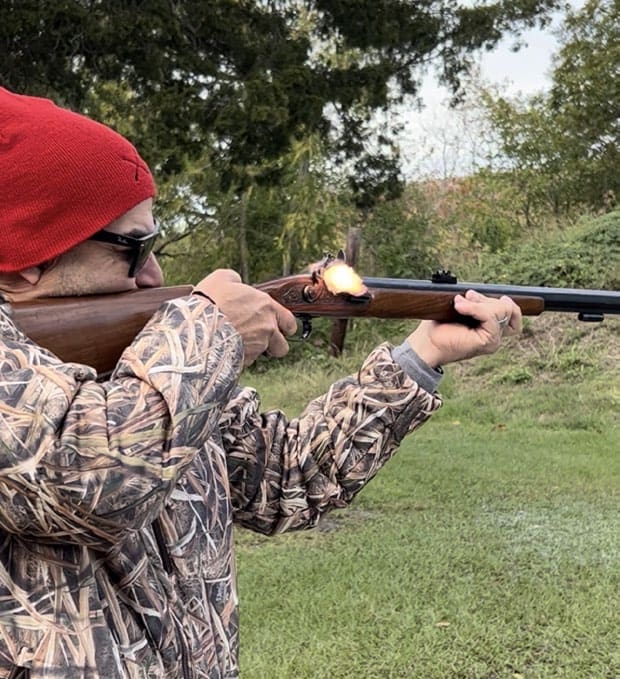
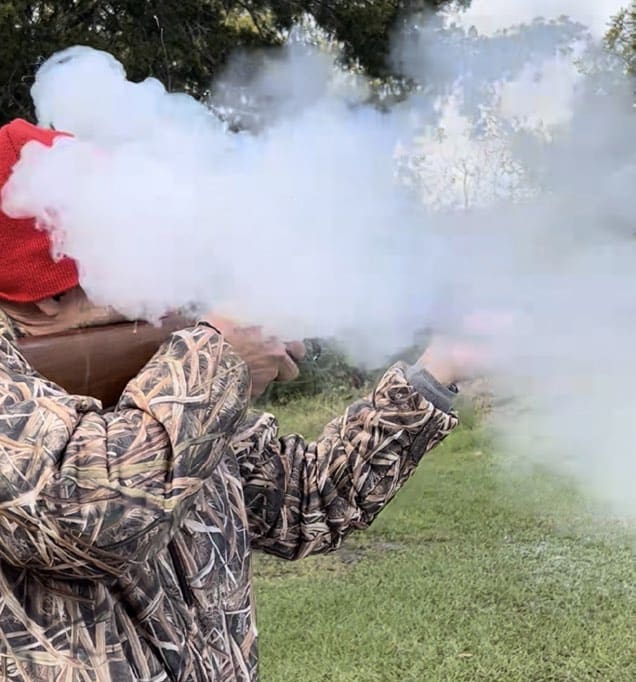
firearms. Fortunately, for those wanting to shoot firearms that came before the bolt-action and lever-action guns, there are also Falling Blocks, Rolling Blocks, and Trapdoors. These unique firearms were common in Europe and the United States before the 1850s.
Falling block rifles were manufactured between 1885 and 1920. Traditional falling block rifles resemble lever-action firearms. They are operated by first cocking or pulling the hammer to the rear until it is locked in place. The lever is opened, and that drops the action down below the breech. A self-contained cartridge is then inserted into the breech. As the lever is closed, the action is raised back in place, locking the breech closed. The firearm is now ready to fire. To shoot, the trigger is pulled, and the hammer falls forward, striking the block that contains the firing pin. The firing pin then strikes the primer, which sets off the initial ignition that sparks the powder, and the expanding gases push the bullet down the barrel and out the muzzle.
Tom Selleck sported a .45-90 falling block rifle in the movie, Quigley Down Under. Today, falling block rifles are making a comeback. Because these rifles can handle such high pressures, modern falling blocks are chambered in dangerous game calibers. These rifles are also the choice of many competition or long-range rifle shooters.
Rolling Block Rifles
Rolling block rifles, also known as the Remington Rolling Block, are a single-shot, breech-loading rifle that shot the newly developed “self-contained” cartridge. The rolling block rifle was patented in 1863 but was not developed into a workable rifle until 1866. E. Remington and Sons took over the patent and developed this action into rifles and handguns. These actions were referred to as the Remington Systems. Remington Rolling Block rifles were so popular that over half the world’s armies adopted rolling block firearms.
Rolling blocks are operated by rolling a circular block to the rear, exposing the breech of the firearm. Rolling block rifles appear to have two hammers. The actual hammer is to the rear of the action and rests on the circular block, which rests on the breech of the rifle. To access the breech to insert a cartridge, the shooter must push the hammer down into the locked position. The tang of the rolling block is then rotated back against the hammer. The cartridge can now be inserted into the breech, and the block is rotated forward and locked in place. The rifle is now ready to be discharged. To discharge, the trigger is pulled, and the hammer falls forward. The hammer nose then strikes the firing pin that extends through the rolling block. The firing pin then strikes that primer of the cartridge, which starts the initial ignition that sets off the powder, sending the bullet down the barrel.
Rolling block rifles were in service between 1866 and 1917. Rolling block rifles became standard military issue around the world. Europe, Eastern Europe, the Middle East, and even African countries such as Egypt adopted the rolling block rifles and handguns as their military light arms. General Custer carried a Remington Rolling Block while his cavalry carried Trapdoor Springfield rifles at the Battle of the Little Bighorn. Poncho Villa and his men carried Remington Rolling Block rifles when they raided Columbus, New Mexico, in 1916.
Trapdoor Rifles
Developed in 1865, the single-shot trapdoor rifle was the first breech-loading rifle adopted by the United States military.
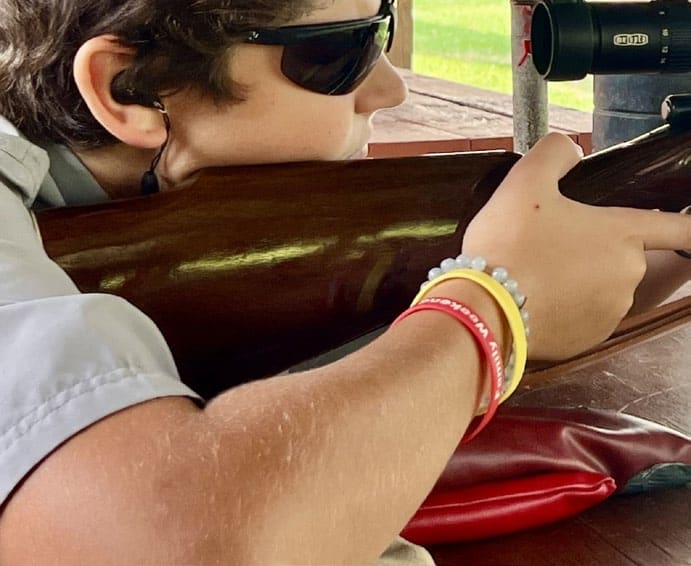
Up until 1865, muzzle-loading rifles were the standard-issue rifle for our military. While the United States was busy fighting the Civil War, the European Countries were developing more advanced breech-loading guns capable of firing self-contained cartridge ammunition. We had no sooner finished our internal conflict when we were facing a possible war with France and other countries.
The trapdoor was born out of a nation that was cash-strapped because it had just won its Civil War. The United States had over one million serviceable muzzle-loading rifles that were converted to trapdoor firearms. Master Armorer, Erskine Allin of the Springfield Armory, took the muzzle-loading issued rifle and removed the top of the rear of the barrel. This portion of the barrel was then refitted with a hinge so that it could be rotated up, allowing for a self-contained cartridge to be inserted.
To operate a trapdoor rifle, the hammer is cocked, or pulled to the rear, until it is locked in place. The hinged trapdoor is rotated upward until the breech is exposed. A self-contained cartridge is then inserted into the breech. The trapdoor is then closed, locking the action in place. The firearm is now ready to discharge. To discharge, the trigger is pulled, and the hammer falls forward, striking the firing pin in the rear of the trapdoor. The hammer then falls forward, striking the firing pin, which strikes the primer of the cartridge. This begins the initial ignition that sets off the powder in the cartridge.
The trapdoor rifle saw service between 1865 and 1892. In 1873, the trapdoor became the standard-issue rifle adopted by the United States Army. The United States military failed to modernize its armament, as advanced weaponry was developed. Many historians lay the blame for the defeat of General Custer at the 1886 Battle of the Little Bighorn on the trapdoor rifle. The warring Indians led by Crazy Horse and Sitting Bull were armed with the newer, superior Henry, Spencer, and Winchester repeating rifles.
In 1892, the era of the trapdoor rifle came to an end. The widespread use of smokeless powder led to the development of the bolt action Krag-Jorgenson rifle. This “modern” rifle became the new standard issue for the United States military, replacing the trapdoor rifle.
AN INTRODUCTION TO SET TRIGGERS
Set triggers are a unique type of firing system found on both older and contemporary rifles. Originating in Europe, set triggers were common in the 1700s in flintlocks, in the 1800s in percussion caps, and in the 1900s in bolt, break, and lever-action firearms. In the U.S., set triggers were preferred by buffalo hunters because of the accuracy at extremely long ranges.
A set trigger is a specialized trigger system that employs a mechanism allowing the shooter to “set” the trigger, so the firearm can be fired with very little pressure to release the firing pin. A normal trigger pull could range between a few pounds and a heavy trigger pull of upwards of six to eight pounds. A set trigger puts the pull between a few ounces to the weight of a “hair,” hence the term, “hair trigger.” A set trigger firing system can be made of one trigger or two. These are called a “single set trigger” or a “double set trigger” firearm.
Single Set Trigger
A single-set trigger looks like a normal bolt-action, break-action, or lever-action firearm with one trigger. The single-set trigger performs both functions: setting the trigger and discharging the firearm. This is done by taking the index finger of the shooting hand, also known as the trigger finger, and sliding it behind the trigger. The trigger finger then puts pressure on the backside of the trigger, sliding it forward. The trigger is now set. At this point, the trigger finger is moved from the rear of the trigger to forward the trigger, without touching it. Once the shooter is ready, the trigger finger barely “touches” the trigger to discharge the firearm. Many Sako, Tikka, and European hunting rifles, like older Mauser or Sauer rifles, came with single-set triggers.
Double Set Trigger
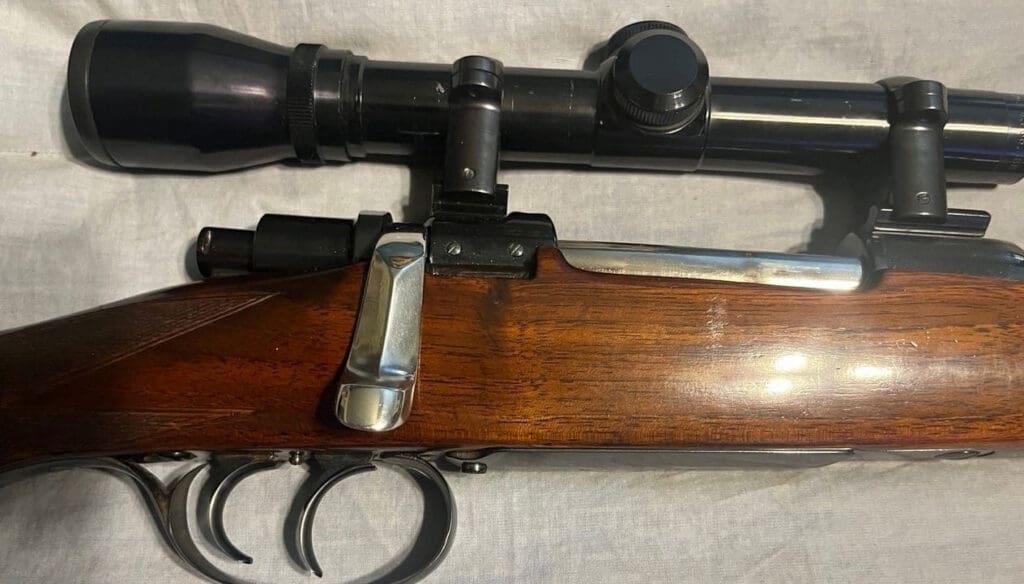
With a double-set trigger system, each trigger performs its own function. The rear trigger sets the trigger, and the forward trigger releases the firing pin to discharge the firearm. This is done by taking the trigger finger, placing it on the rear trigger, and pulling. The shooter will feel a “click,” which indicates the forward trigger is set. The shooter then moves his or her trigger finger forward of the front trigger without touching it. When the shooter is ready, he or she barely “touches” the forward trigger to discharge the firearm. A double-set trigger system looks like the two triggers you would see on a side-by-side shotgun. The difference is that a side-by-side shotgun would have two barrels, and the double-set trigger rifle only has one barrel. Examples of double-set trigger rifles are Mannlichers
and older Krieghoff models.
With a double-set trigger system, each trigger performs its own function. The rear trigger sets the trigger, and the forward trigger releases the firing pin to discharge the firearm. This is done by taking the trigger finger, placing it on the rear trigger, and pulling. The shooter will feel a “click,” which indicates the forward trigger is set. The shooter then moves his or her trigger finger forward of the front trigger without touching it. When the shooter is ready, he or she barely “touches” the forward trigger to discharge the firearm. A double-set trigger system looks like the two triggers you would see on a side-by-side shotgun. The difference is that a side-by-side shotgun would have two barrels, and the double-set trigger rifle only has one barrel. Examples of double-set trigger rifles are Mannlichers and older Krieghoff models.
SET TRIGGER SAFETY
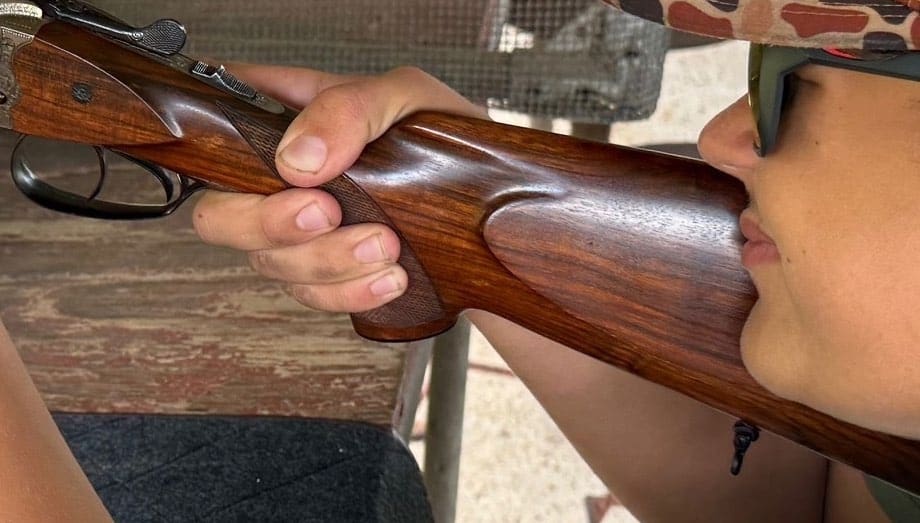
You cannot shoot a rifle with set triggers the same way you shoot a “regular” rifle. It has to do with pulling the rifle in tightly into your shoulder. Most people who are used to using a regular rifle will place their finger on the trigger guard and then feel for the trigger before they pull their rifle tightly into their shoulder, as they place their index finger on the trigger to shoot. In other words, when lined up on target the shooter feels for the trigger as they are pulling in the rifle tightly into their shoulder, then squeezes the trigger. If the same technique is applied when using a rifle with a set trigger, the result is the rifle not being firmly pulled into the shoulder, since their initial trigger touch is to set the trigger. The shooter generally experiences much more “felt recoil” when this occurs, and the result is the shooter “pulls” their shot. This happens because as soon as the index finger contacts the trigger, the firearm discharges when the shooter is not ready, because of the “hair trigger.”
When shooting a rifle with set triggers, the rifle must be pulled tightly into the shoulder when you set the trigger. When the shooter gets behind the rifle and aligns his or her sights with the target, the rifle should be pulled tightly into the shoulder. When using a double-set trigger system, once the rifle is on target and pulled into the shoulder, the shooter should slip his or her index finger into the rear trigger and pull it rearward to set the rifle. It is at this point that the index finger can be moved to the front trigger to fire.
When using a single-set trigger system, the rifle should be pulled tightly into the shoulder when the target is within the sights. The index finger is then slipped behind the trigger and pushed forward. While maintaining a tight pull of the rifle into the shoulder, the index finger is then placed in front of the trigger. Once the finger makes contact and barely touches the trigger, the firearm should discharge.
Set triggers are a very unique type of firearm. They can be very accurate and fun to shoot. If you have never had a chance to experience this type of firearm, get out of your comfort zone and try it out. By trying out different types of guns, actions, and the various shooting sports, you just might find an interest in something you have never expected!
FIRING PINS: A DEEPER DIVE
One of the major parts of a firearm’s action is the firing pin. The firing pin is what sets off the initial detonation when the trigger is pulled by striking the primer of the cartridge or shotshell. Once the primer is struck, the gunpowder ignites, builds pressure inside the case, and sends the projectile (a bullet or shot) down the barrel and leaves the muzzle. Without the development of the modern firing pins, firearms would be restricted to primitive-type guns such as matchlocks, flintlocks, and percussion caps.
The most important part of a firing pin, and a component of every firing pin, is the nose. The nose of the firing pin is the part that makes contact with the primer of a cartridge or shotshell to start the ignition process. Sometimes the nose of the firing pin is referred to as the “tip.” What is found after the nose determines what type of firing pin you have. Determine which firing pin(s) you are familiar with and may have in your collection. Challenge yourself to find a firearm with an “unfamiliar” firing pin and try your hand on an upcoming hunt using a new device!
Different types of firearms use different types of firing pins, so knowing the different ignition systems helps you understand how your firearm works.
Free-Floating Firing Pin
A free-floating firing pin is held securely in place but is unrestrained by a firing pin spring. Many firearms that have a bolt, such as the M1 Garand and the AR-15, contain free-floating firing pins. Note: Firearms that have this type of firing pin can have unintentional discharges because of the possibility of a “slam fire.”
Fixed Firing Pin
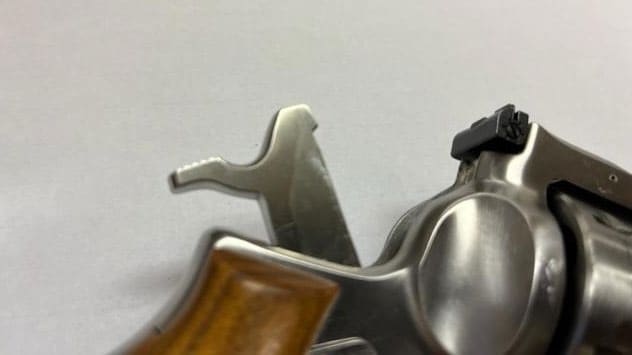
Fixed firing pins are the simplest type of firing pins. This type of firing pin can be a protruding piece on a bolt face or extending from an exposed hammer. Fixed firing pins are found on older revolvers, machine guns, or submachine guns, and blowback machine guns. Revolvers with fixed firing pins can be integral or swivel. Note: Because this type of firing pin is fixed, it has the potential for accidental discharges before the cartridge is fully seated in the chamber in automatic firearms or even by striking the hammer spur on a revolver.
Integral Fixed Firing Pin
Integral firing pins are revolver fixed firing pins that are attached to the hammer and are a solid, non-moving component that impacts the primer of a cartridge or shotshell.
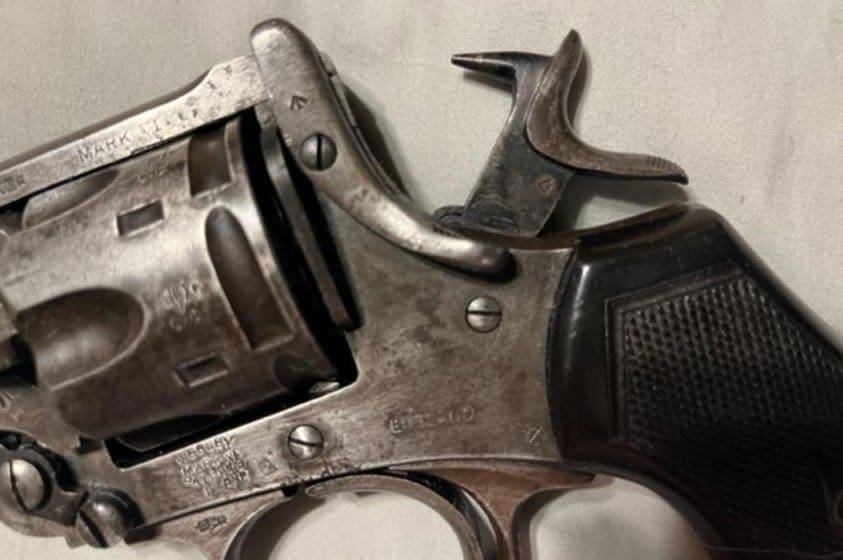
Swivel Fixed Firing Pin
Swivel firing pins are revolver fixed firing pins that are attached to the hammer and have a pivot pin to allow the firing pin to move freely.
Active Firing Pins
Active firing pins are attached to a revolver’s hammer, regardless of if it is integral or swivel, that move with the hammer to the primer of the cartridge or shotshell.
Passive Firing Pins
Passive firing pins are detached from the revolver’s hammer and remain in the frame of the firearm. This type of firing pin is usually found in revolvers with a transfer bar safety system. In revolvers with a passive firing pin, the hammer swings forward, striking the firing pin in the frame, sending it to impact the primer of the cartridge or shotshell.
Striker Firing Pin
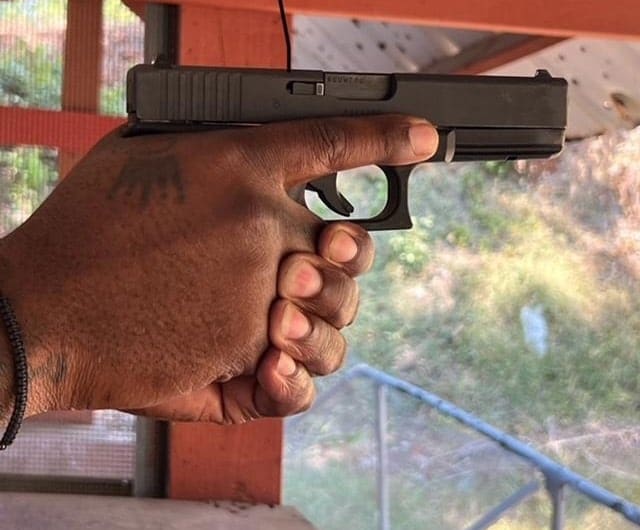
A striker firing pin works by being propelled forward by a compressed firing pin spring. In this type of firing system, the hammer and firing pin is one piece, activated by the firing pin spring. Striker fire firing pins are found in many modern semi-automatic pistols. Usually, striker-fired firearms are not fully cocked when the gun is charged. The cocking process is not complete until the trigger is depressed, which should prevent the firearm from discharging if dropped or bumped. If the firing pin were to drop without the trigger being squeezed, it should prevent the gun from discharging by hitting the primer with only a “light strike.”
Linear Hammer Firing Pin
Bolt-action firearms that utilize a spring to propel a firing pin into the primer of a cartridge or shotshell are a type of linear hammer firing system. In this type of firing system, the hammer and firing pin are separate pieces, activated by the firing pin spring. The spring releases the hammer, which hits the firing pin, propelling it into the primer. Within the category of linear hammer firing pins, there are two cocking systems. These are cock-on-open and cock-on-close actions.
Lock-On-Open Bolts
Some linear hammer firing pins are lock-on-open bolts. This type of bolt action is cocked when the bolt is rotated to open, and the striker is set rearward by compressing the firing pin spring. The sear is set before the bolt is closed.
Lock-On-Close Bolts
Some linear hammer firing pins are lock-on-close bolts. This type of bolt, when opened, pulls the striker to the rear, over the sear. When the bolt is rotated forward, the striker is held to the rear by the sear.
It is the responsibility of every firearm owner to know how to use their firearm properly and safely. This is where the “average” gun owner’s responsibility ends. If you are a true firearms enthusiast, generally, someone who is knowledgeable about firearms tends to be a safer gun owner. This is because they have a deeper interest and continually seek more information than the gun owner who never reads anything regarding firearms, including the owner’s manual.
Learning about guns from the past is not only entertaining but also educational. By applying what you learn to hunting, the excitement and that “new hunter” feeling returns. The more you read, the more you know, and before you know it, you suddenly realize that you have become a more knowledgeable shooter!