
Sub-Total: $0.00
NRA Instructors Need to Check those Shotgun Chambers
Tags:
How To Handle 2 ½-Inch Chambers
By Heidi Lyn Rao
As an NRA Firearms Instructor, one of my favorite courses to teach is the NRA Basic Shotgun Course. There is nothing like witnessing your students break their first clay target. The expression on their faces along with their excitement justifies all the hard work you put into the class! Of course, there is also excitement and jubilation when your students hit their targets in the NRA’s Basic Pistol and Rifle Courses, but when someone tracks a moving target and breaks their first clay, it is just on a different level!
It is important to remember that not every student can afford a brand new high- end, over-and-under Perazzi Shotgun from Italy. It is exciting to see all the fascinating shotguns that students bring to class. Many of the older shotguns that are brought to class have interesting genealogical stories attached to them. Unfortunately, many of these heirlooms are not allowed to be shot in class for safety reasons.
To many of the student’s surprise, their shotguns are chambered for 2 ½-inch shotshells! (Not the more common 2 ¾-inch to 3-inch chambers). Many shotguns that were made prior to 1930, especially shotguns from Europe, were chambered for smaller shotshells. This is why it is important for NRA Shotgun Instructors to be prepared to see this and have backup shotguns in their classes for students to use.
Even though these students are disappointed that their shotgun cannot shoot modern shells, this can easily be resolved. There are three solutions for this situation. The first is to find 2 ½-inch shotshells that can be shot out of the gun. These can be somewhat difficult find. The second solution is to reload your own 2 ½-inch shotshells,
but you need to have all the proper reloading equipment or know someone who does. The third solution is to ream out the chamber of the shotgun. The good thing about this option is it is fairly inexpensive and can easily be done by the owner.
An important note to NRA Instructors: As NRA Instructors, you are not gunsmiths nor are you authorized to repair or modify any firearm in your classes under the title of Certified NRA Instructor. This information is for the purpose of letting your students know that they have options. It is up to your students to do their own research and/or find their own qualified gunsmith.
The first option is to find shotgun shells that match the chamber of your shotgun. This can be difficult but the right size shotshells are available if you can find them. A better solution might be to ream out your shotgun’s chamber. I personally like this idea for safety reasons. Since 2 ½-inch shotshells are uncommon, if someone accidentally loads a 2 ¾-inch shotshell into a chamber that accepts a 2 ½-inch shotshell, a gun that has been reamed could prevent a nearly inevitable accident from happening. It is important that shotgun enthusiasts understand that putting the wrong size shotshell in a shotgun and pulling the trigger, could lead to damaging the firearm and serious bodily injury or death to the shooter.
I have tried different chamber reamers and found that some cut smoother than others. I have started using Pacific Tool and Gauge (PTG) chamber reamers and am very happy with the way they perform.
Materials Needed to Ream a Shotgun Chamber
- Gun Cleaning Supplies – Solvent, Oil, Cleaning Rod, Appropriate Patches
- Shotgun Chamber Gauge
- Tool Cutting Oil
- Shotgun Chamber Reamer with Appropriate Pilot Bushing
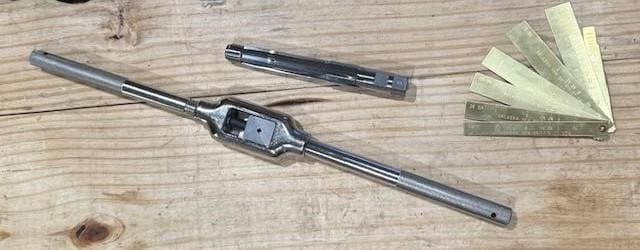
- Tap Wrench
- Brush or Soft Rag
Procedure For Reaming a Shotgun Chamber
- Completely unload your shotgun and remove all ammo from the room
- Secure unloaded shotgun barrel in a padded vise
- Thoroughly clean the shotgun chamber and barrel
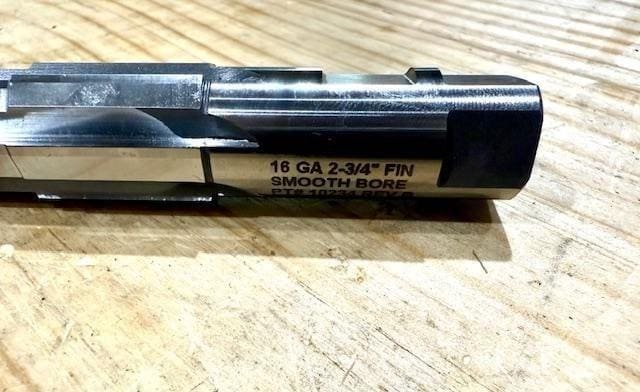
- Check the depth of the chamber with the chamber gauge to verify size of chamber
- Insert Chamber Reamer
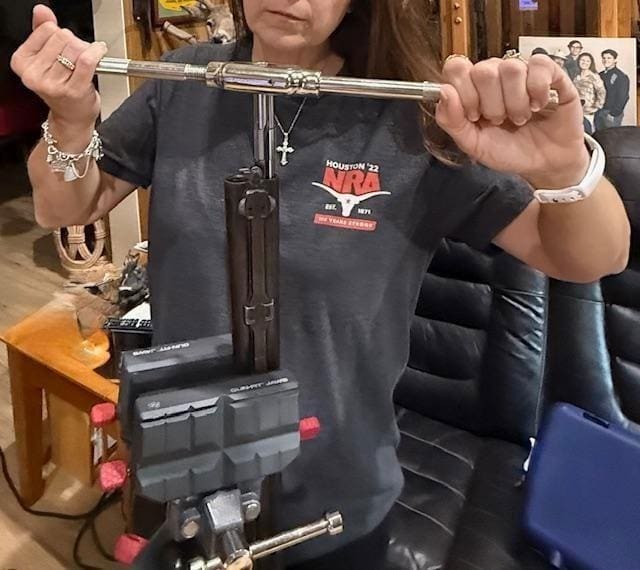
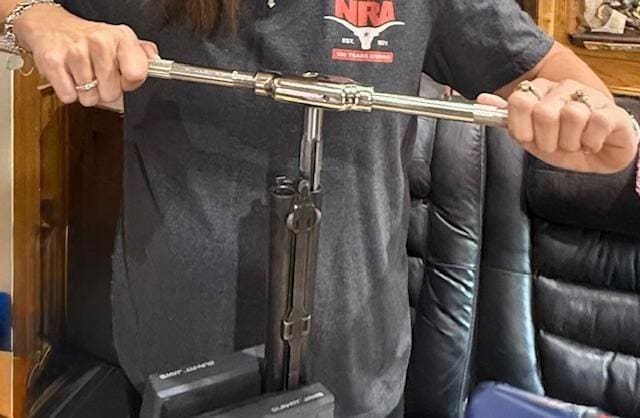
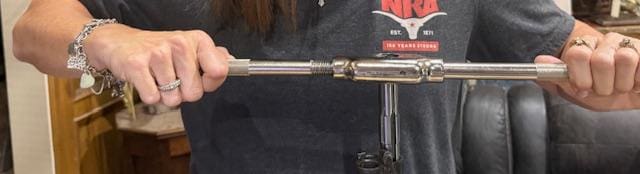
- Attach Tap Wrench
- Turn the Reamer to the chamber reamer
- When you feel the reamer cutting, turn ½ to ¾ turn and remover reamer
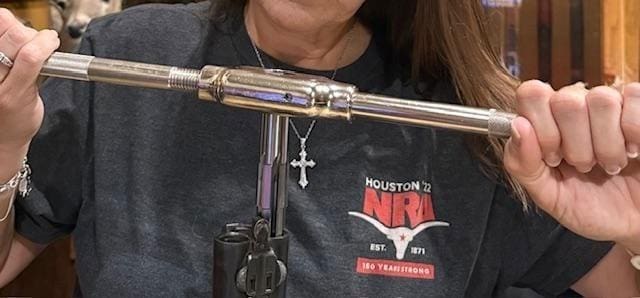
- Remove metal shaving from the reamer with the brush or soft cloth
- Remove the metal shavings chamber and barrel with the cleaning supplies
- Repeat steps 7 through 10 until the reamer hits the stop and is no longer cutting
- Periodically check the chamber with the gauge to check progress while cutting
Pacific Tool and Gauge
Every now and then, you come across a company that you never knew about and wonder how you ever got along without it. Pacific Tool and Gauge (PTG) is one of those companies that would be of interest to many shooters, especially NRA Instructors. The PTG website to shooters is like a giant toy store for kids!

As an NRA Instructor, students continuously ask me where they can go to find items to replace worn out firearm components, enhance or accessorize the firearm that they currently shoot, or find reamers to change the caliber of their existing firearm or lengthen a shotgun chamber to accept a longer shot shell. PTG offers carbide and high- speed chamber reamers, forcing cone reamers, custom gauges, barrels, firing pins, and triggers to name a few. They seem to have it all!
Pacific Tool and Gauge proudly supports the NRA and offers discounts to NRA Instructors. All that NRA Instructors must do is send PTG their valid NRA Instructor Certification card. PTG also offers discounts to gunsmithing students and military veterans.
If you are reaming out the chamber from an older shotgun, there are a few things to remember. First, you must not forget that you are still dealing with an older shotgun.
Reaming a 2 ½-inch chamber to a 2 ¾-inch chamber is usually not a problem. Just do not try to turn your shotgun with a 2 ½-inch chamber into a 3 ½-inch magnum chamber!
Second, remember that these older shotguns were proofed for lighter loads than the modern loads we regularly use now. Most of these shotguns were proofed for 7/8- ounce to 1-ounce loads. These firearms are usually safe to use field loads with moderate velocities. There are plenty of loads on the market that will work just fine in these shotguns.
As an NRA Instructor it is important to be ready for anything that might show up in your classroom. Remember that it is your class, and you set the rules. This is especially true when safety issues arise. As an instructor you are responsible for the safety of everyone in your class!